Old Sock Vintage Font Inspired by Classic Shop Signage
Old Sock finds its roots in dodgy black and white photographs of traditional shop signage, storefront lettering, and hand-painted signs from a time before digital perfection. These references are not polished or clean; they are gritty, imperfect, and full of character. Old Sock embraces those imperfections and transforms them into a usable, expressive typeface that feels authentic, bold, and alive.
Instead of chasing modern trends or sterile design rules, Old Sock looks backward to move forward. It captures the spirit of old streets, local markets, and small businesses where signage was crafted by hand and every letter told a story. This vintage font is designed for creators who want their typography to feel human, tactile, and memorable.
The Inspiration Behind Old Sock
Old Sock draws direct inspiration from faded photographs of shop signs found in archives, old newspapers, and forgotten corners of cities. These images often show lettering that is warped by time, uneven brush strokes, and paint that has chipped or faded under years of weather. Rather than correcting these qualities, Old Sock amplifies them.
The font reflects a world where typography was created by hand, not by algorithms. Every curve, edge, and stroke is intentionally imperfect, echoing the visual language of classic signage. This approach gives Old Sock a sense of history and authenticity that cannot be replicated with purely digital fonts.
Hand-Drawn Letterforms with Strong Personality
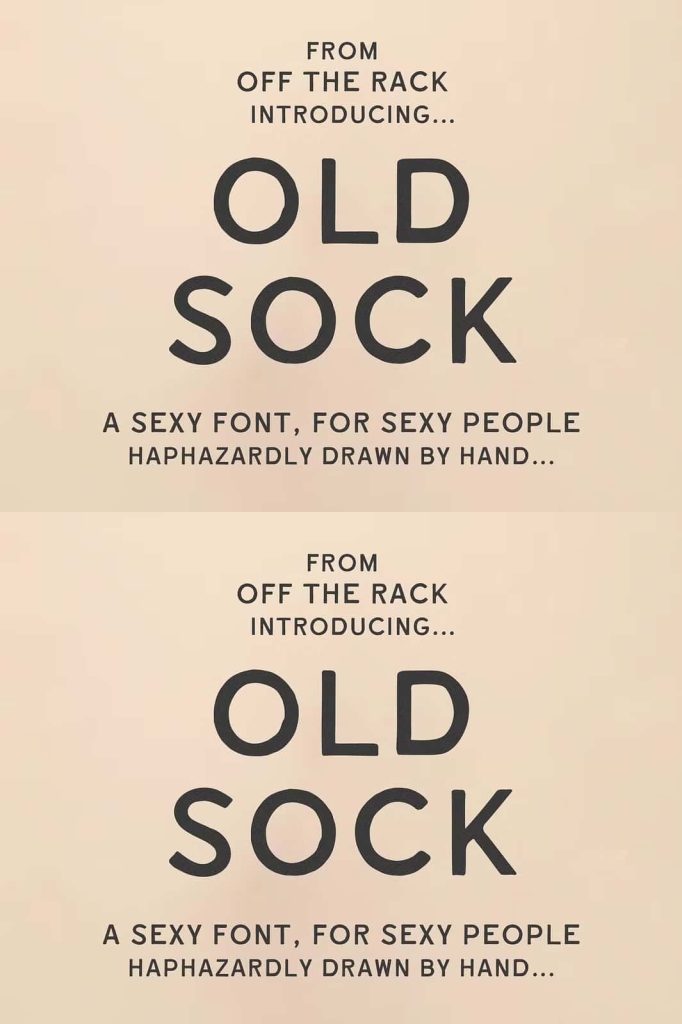
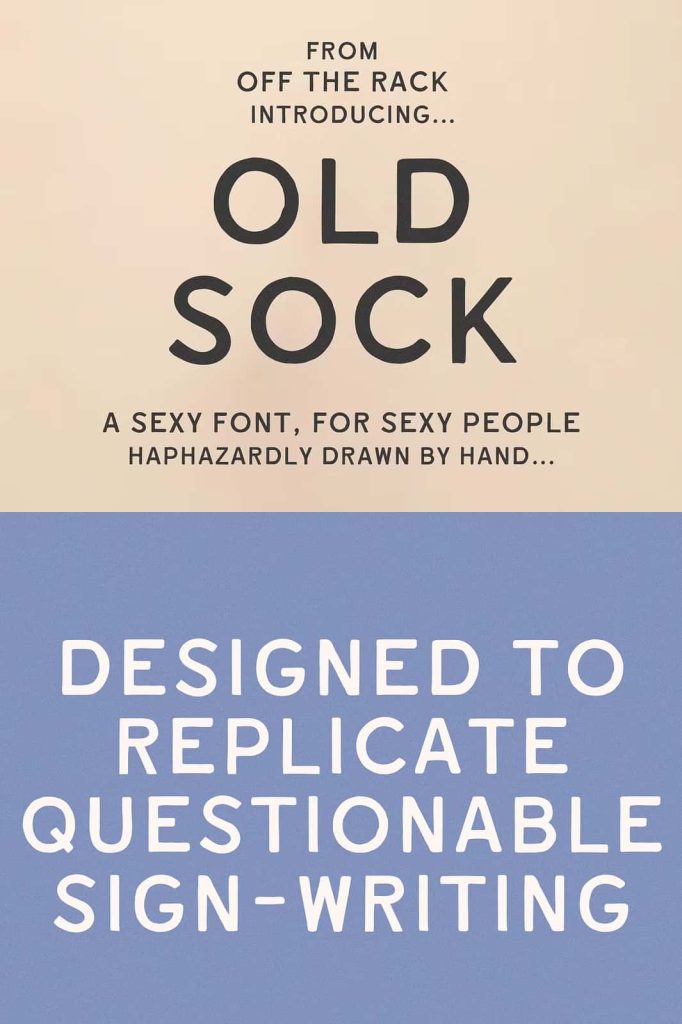
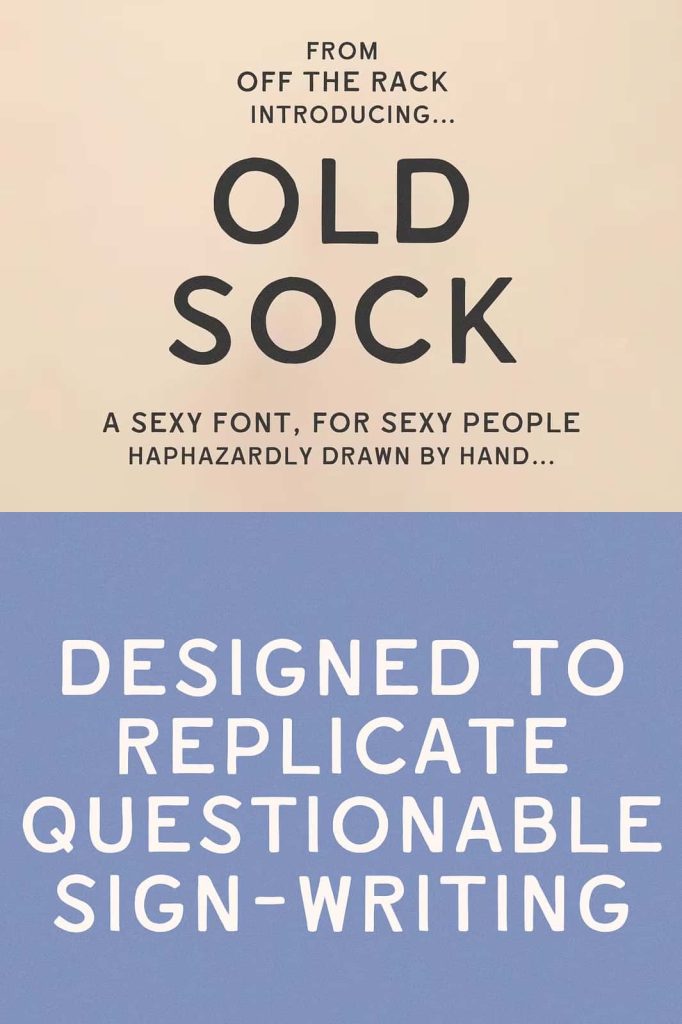
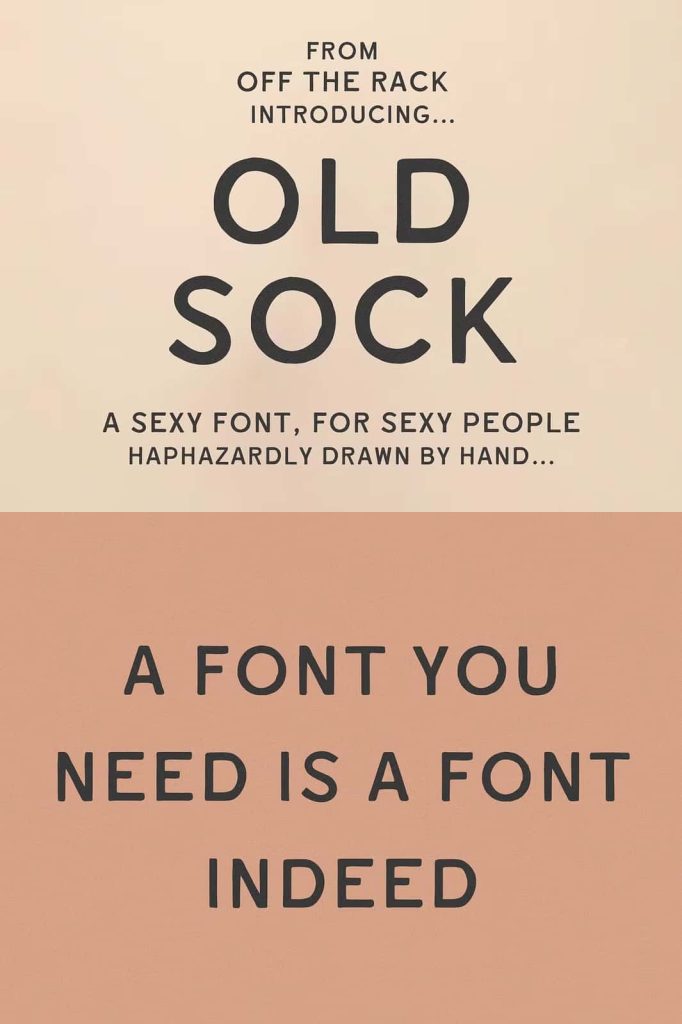
Old Sock is fully drawn by hand to ensure that every character carries a unique personality. The letterforms feature subtle inconsistencies in width, height, and spacing, which add warmth and visual interest. These details help the font feel organic and expressive, making it ideal for designs that need to stand out.
Despite its raw, hand-crafted appearance, Old Sock remains highly legible. The structure of each letter is carefully balanced to ensure clarity across a wide range of uses. This combination of readability and character makes Old Sock both practical and visually engaging.
A Versatile Vintage Font for Modern Designers
Old Sock is not just a decorative typeface reserved for special occasions. It is designed to become a reliable tool in any designer’s font library. Whether you are working on logos, branding, packaging, posters, apparel, or editorial layouts, Old Sock adapts easily while maintaining its distinctive vintage tone.
The font performs especially well in headlines, titles, and short blocks of text where personality matters most. It instantly adds a sense of heritage, craftsmanship, and authenticity to any project. Designers looking to create a nostalgic atmosphere without sacrificing usability will find Old Sock to be an excellent choice.
Why Old Sock Will Become One of Your Most Used Fonts
Old Sock is built to be used often, not just admired. Its strong visual presence helps designs feel confident and intentional, while its hand-drawn nature keeps them approachable and relatable. This balance makes Old Sock a font that designers return to again and again.
Because it captures a timeless aesthetic rather than a fleeting trend, Old Sock fits naturally into a wide range of creative styles. It works just as well for vintage-inspired branding as it does for modern projects that need a touch of character. Over time, it becomes less of a novelty and more of a trusted creative companion.
Perfect for Branding, Logos, and Retro Design
Old Sock excels in projects that demand authenticity and personality. Brands that want to communicate craftsmanship, tradition, or individuality will benefit from its expressive style. The font brings depth and emotion to logos, signage, packaging, and promotional materials.
By combining hand-drawn charm with modern usability, Old Sock bridges the gap between past and present. It allows designers to tap into vintage aesthetics while still meeting the demands of contemporary design workflows. This makes Old Sock not just another font, but a long-term investment in strong visual identity.
Old Sock Vintage Font Inspired by Classic Shop Signage
Old Sock finds its roots in dodgy black and white photographs of traditional shop signage, storefront lettering, and hand-painted signs from a time before digital perfection. These references are not polished or clean; they are gritty, imperfect, and full of character. Old Sock embraces those imperfections and transforms them into a usable, expressive typeface that feels authentic, bold, and alive.
Instead of chasing modern trends or sterile design rules, Old Sock looks backward to move forward. It captures the spirit of old streets, local markets, and small businesses where signage was crafted by hand and every letter told a story. This vintage font is designed for creators who want their typography to feel human, tactile, and memorable.
The Inspiration Behind Old Sock
Old Sock draws direct inspiration from faded photographs of shop signs found in archives, old newspapers, and forgotten corners of cities. These images often show lettering that is warped by time, uneven brush strokes, and paint that has chipped or faded under years of weather. Rather than correcting these qualities, Old Sock amplifies them.
The font reflects a world where typography was created by hand, not by algorithms. Every curve, edge, and stroke is intentionally imperfect, echoing the visual language of classic signage. This approach gives Old Sock a sense of history and authenticity that cannot be replicated with purely digital fonts.
Hand-Drawn Letterforms with Strong Personality
Old Sock is fully drawn by hand to ensure that every character carries a unique personality. The letterforms feature subtle inconsistencies in width, height, and spacing, which add warmth and visual interest. These details help the font feel organic and expressive, making it ideal for designs that need to stand out.
Despite its raw, hand-crafted appearance, Old Sock remains highly legible. The structure of each letter is carefully balanced to ensure clarity across a wide range of uses. This combination of readability and character makes Old Sock both practical and visually engaging.
A Versatile Vintage Font for Modern Designers
Old Sock is not just a decorative typeface reserved for special occasions. It is designed to become a reliable tool in any designer’s font library. Whether you are working on logos, branding, packaging, posters, apparel, or editorial layouts, Old Sock adapts easily while maintaining its distinctive vintage tone.
The font performs especially well in headlines, titles, and short blocks of text where personality matters most. It instantly adds a sense of heritage, craftsmanship, and authenticity to any project. Designers looking to create a nostalgic atmosphere without sacrificing usability will find Old Sock to be an excellent choice.
Why Old Sock Will Become One of Your Most Used Fonts
Old Sock is built to be used often, not just admired. Its strong visual presence helps designs feel confident and intentional, while its hand-drawn nature keeps them approachable and relatable. This balance makes Old Sock a font that designers return to again and again.
Because it captures a timeless aesthetic rather than a fleeting trend, Old Sock fits naturally into a wide range of creative styles. It works just as well for vintage-inspired branding as it does for modern projects that need a touch of character. Over time, it becomes less of a novelty and more of a trusted creative companion.
Perfect for Branding, Logos, and Retro Design
Old Sock excels in projects that demand authenticity and personality. Brands that want to communicate craftsmanship, tradition, or individuality will benefit from its expressive style. The font brings depth and emotion to logos, signage, packaging, and promotional materials.
By combining hand-drawn charm with modern usability, Old Sock bridges the gap between past and present. It allows designers to tap into vintage aesthetics while still meeting the demands of contemporary design workflows. This makes Old Sock not just another font, but a long-term investment in strong visual identity.