Editor’s Hand Font
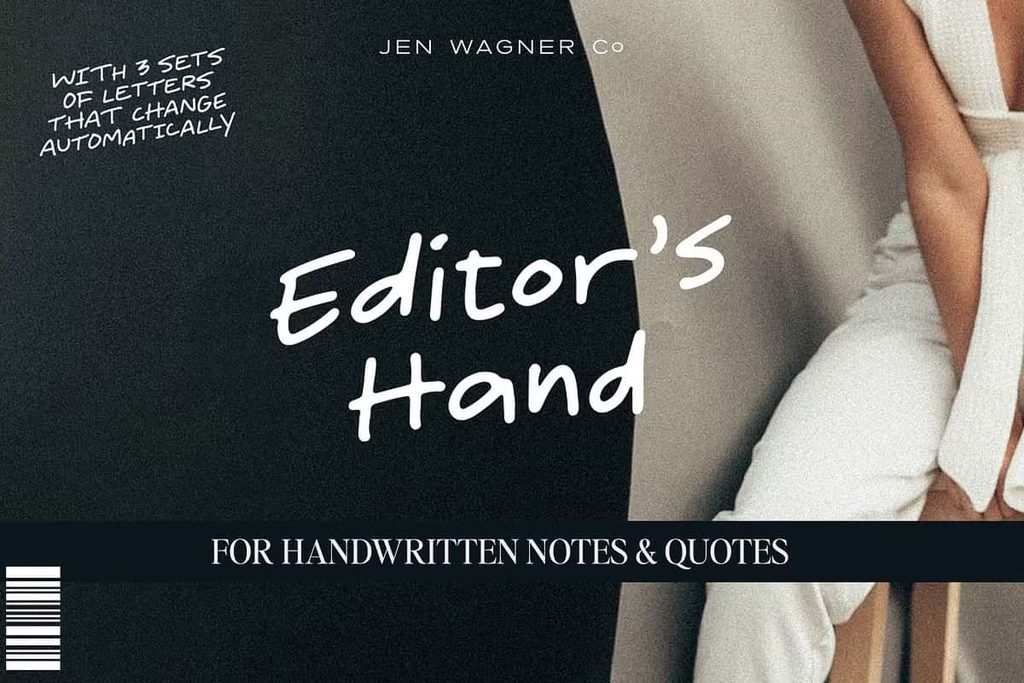
Editor’s Hand is a natural handwritten font that brings the familiar character of handwritten notes into your creative projects. Designed with an authentic editorial feel, this typeface works especially well when you want your design to look personal, spontaneous, and thoughtfully written by hand. Its casual appearance helps transform ordinary text into something that feels more expressive and human.
Whether you create magazine layouts, branding materials, social media graphics, stationery, or inspirational quotes, Editor’s Hand gives your typography a distinctive handwritten personality. Use it to add a personal touch to polished designs without losing the visual character of a real editor’s handwriting.
A Handwritten Font Inspired by Editorial Notes
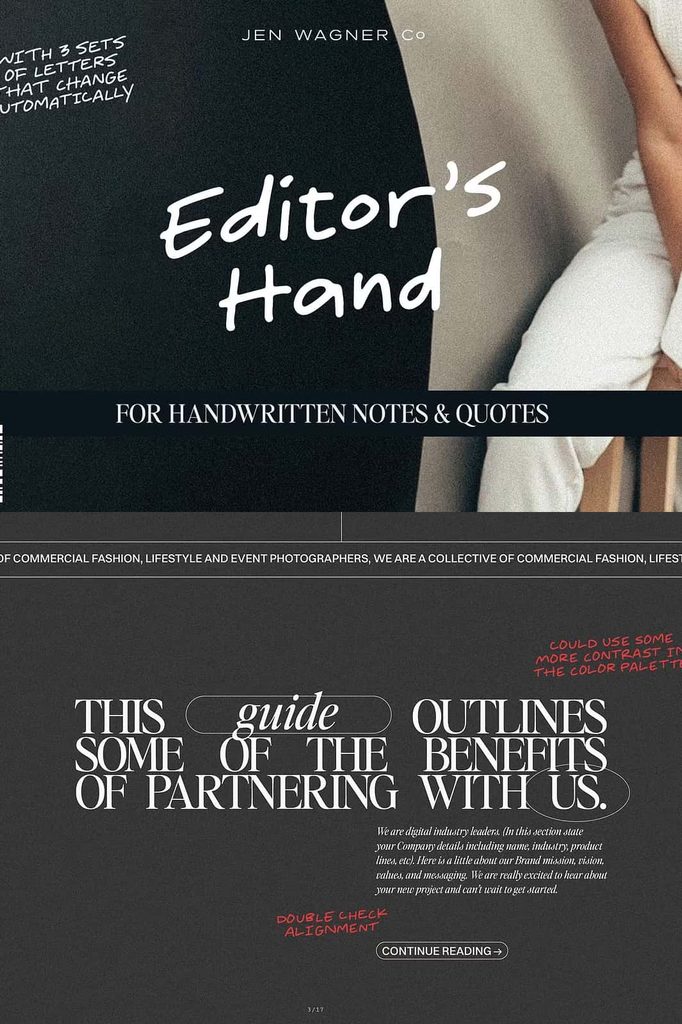
Editor’s Hand takes inspiration from the handwritten comments that editors often leave on design proofs, manuscripts, and printed layouts. These quick notes can make a professional document feel more personal, practical, and authentic. This font captures that same visual idea and turns it into a useful display typeface for modern design projects.
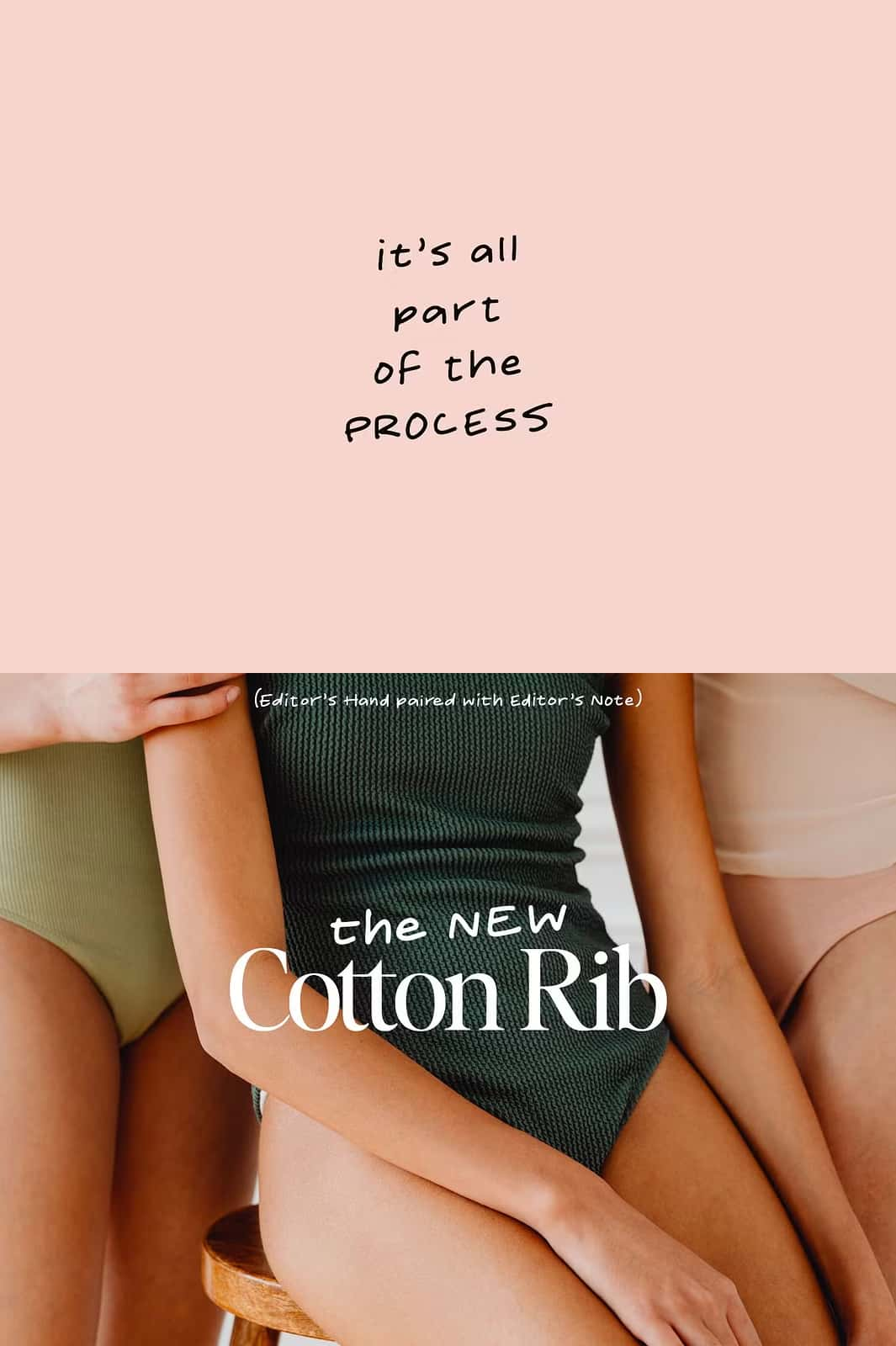
The design works particularly well when you want to recreate the appearance of an editor marking up a magazine page. Pair Editor’s Hand with clean typography, editorial headlines, or a sophisticated serif font to create contrast between polished typesetting and informal handwritten annotations. The combination can give your composition the look of an actively reviewed and thoughtfully edited design proof.
Why Choose Editor’s Hand?
Editor’s Hand adds personality without requiring complicated typography. Instead of relying on decorative flourishes or overly elaborate lettering, it focuses on the recognizable appearance of handwriting. This approach makes the font easy to integrate into a wide range of creative compositions.
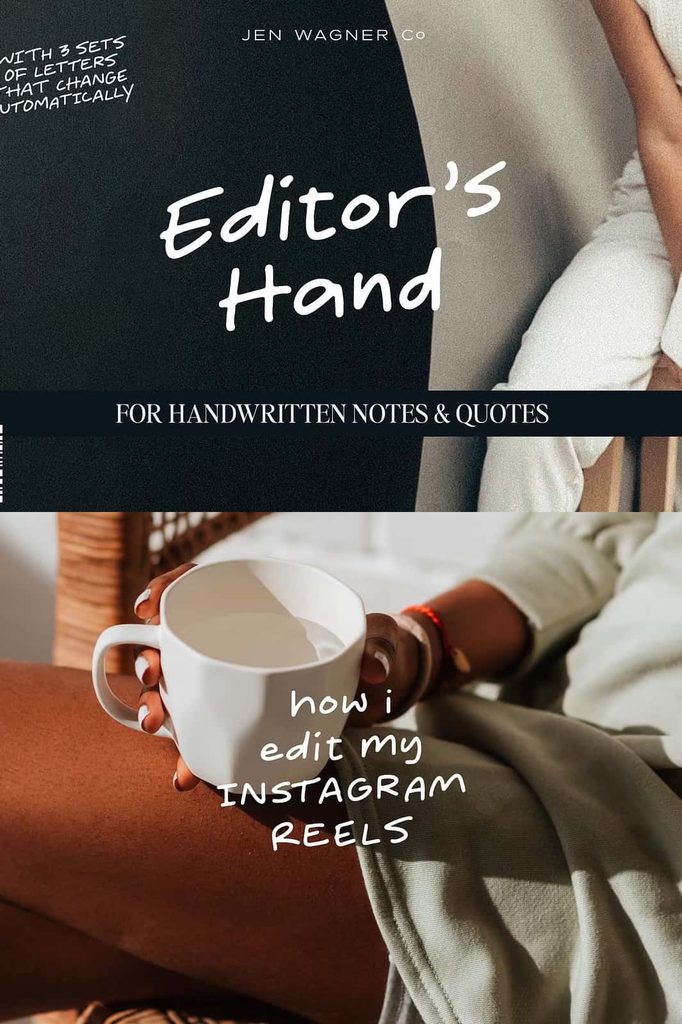
Use Editor’s Hand whenever your project needs a warmer and more personal voice. Add a short handwritten note to a poster, place a handwritten phrase beside a photograph, or use it to highlight an important message in an editorial composition. The font can also help separate supporting text from your primary typography, creating a clear visual hierarchy.
Perfect for Handwritten Notes
Editor’s Hand naturally suits handwritten notes and annotations. Use it to recreate the appearance of quick comments, creative directions, reminders, or personal observations. It can make digital layouts feel more tactile by introducing the visual character of pen-written text.
Great for Quotes and Short Messages
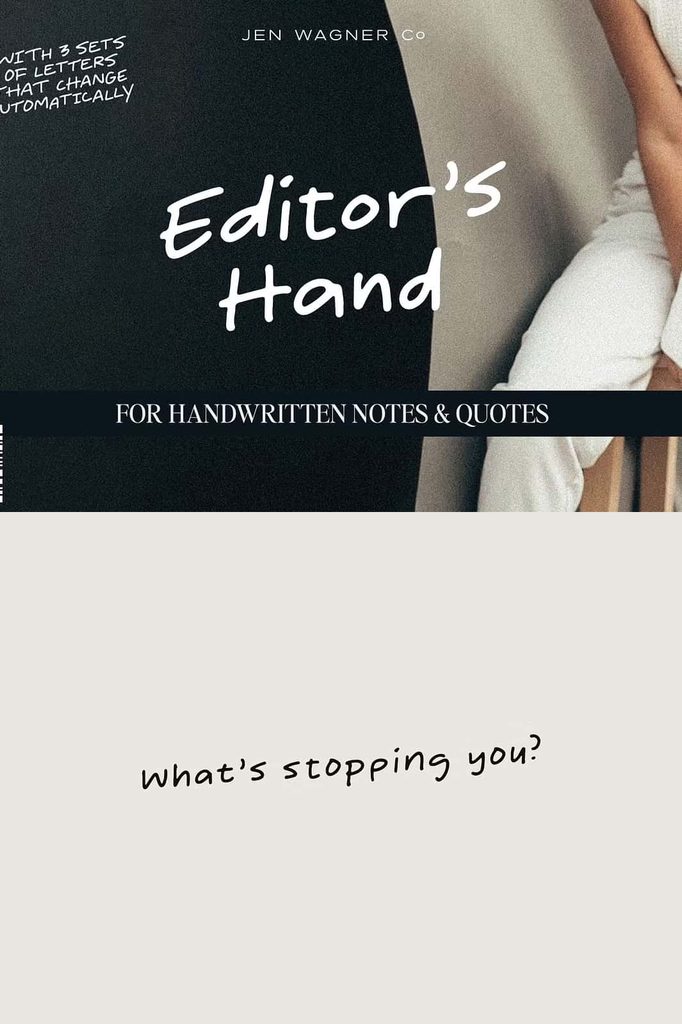
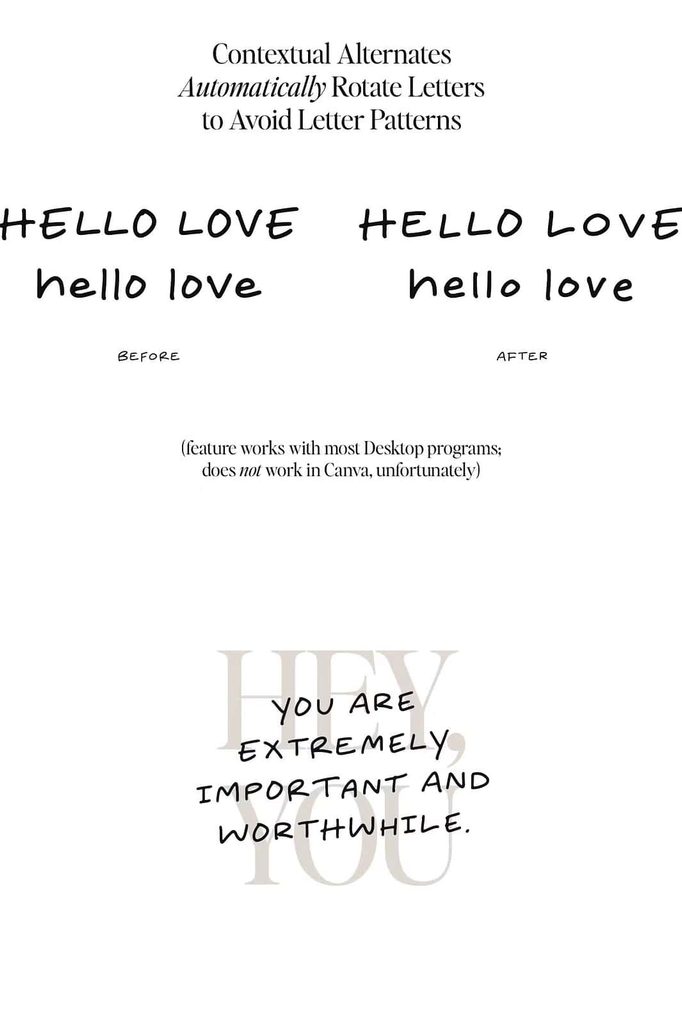
Short quotes become more personal when you present them with a handwritten style. Editor’s Hand works well for inspirational phrases, captions, statements, and small pieces of expressive copy. Place the lettering over photographs, illustrations, textured backgrounds, or simple layouts to create a relaxed and approachable result.
Add Personality to Logos
Editor’s Hand can also support logo and branding concepts that need a human touch. Use the font for small business identities, creative studios, personal brands, lifestyle projects, or editorial-inspired businesses. Its handwritten appearance can help a logo feel more approachable while giving the overall identity a distinct visual voice.
Create an Authentic Magazine Editor’s Note Effect
One of the strongest uses for Editor’s Hand is recreating the appearance of handwritten editorial annotations. When you pair it with an editorial typeface or the accompanying Editor’s Note design, you can build a convincing magazine proof aesthetic. Add handwritten comments around headlines, images, captions, or blocks of text to simulate the working process behind a published design.
This technique works especially well for posters, magazine-inspired graphics, portfolio presentations, social media artwork, and promotional materials. The contrast between structured typography and informal handwriting creates visual interest while communicating the idea of an active creative process.
Editor’s Hand for Creative Projects
You can use Editor’s Hand across many different design categories. Its flexible handwritten character allows you to experiment with both professional and casual compositions. Use it sparingly for small annotations, or make it a more prominent part of your typography when you want the handwritten style to lead the design.
Consider using Editor’s Hand for magazine layouts, editorial graphics, posters, greeting cards, stationery, invitations, social media posts, branding projects, packaging, quotes, personal notes, presentations, and creative mockups. It can also work beautifully in projects that aim to reproduce the look of sketches, proof sheets, design notes, or handwritten commentary.
Pair Editor’s Hand with Clean Typography
For an effective editorial composition, combine Editor’s Hand with a clean serif or sans serif typeface. Let the primary font handle headlines and body copy while Editor’s Hand adds annotations, comments, emphasis, or personality. This pairing creates a useful contrast between formal and informal typography.
You can also experiment with scale, rotation, spacing, and placement. Position handwritten words beside photographs, place short notes between blocks of text, or use them as visual accents around a headline. These simple techniques can make a layout feel more dynamic and intentionally designed.
Bring a Personal Touch to Your Design
Handwriting communicates a sense of individuality that standard typography often cannot reproduce. Editor’s Hand uses that quality to make digital designs feel more direct and personal. Instead of presenting every message with the same polished appearance, you can introduce handwritten details that suggest personality, creativity, and human involvement.
From a simple handwritten quote to a complete magazine proof concept, Editor’s Hand gives you a practical way to introduce this character into your work. Its editorial inspiration makes it particularly useful for designers who want to combine professional layouts with the informal energy of handwritten notes.
Download and Use Editor’s Hand Font
Editor’s Hand is a versatile choice for designers who want to create authentic handwritten details. Use it to write notes, enhance quotes, develop logos, create editorial annotations, or add a personal handwritten touch to almost any creative project. Its distinctive style helps bridge the gap between carefully designed typography and the natural appearance of handwritten communication.
If your next project needs an editorial, personal, or handwritten aesthetic, Editor’s Hand provides a simple way to achieve it. Add handwritten comments to a magazine-inspired layout, create a memorable logo, highlight a quote, or give your artwork the appearance of a real design proof. With the right combination of typography and placement, Editor’s Hand can turn a clean composition into a more expressive and human design.